SO! Reads: Marisol Negrón’s Made in NuYoRico: Fania Records, Latin Music, and Salsa’s Nuyorican Meanings 

I began reading Marisol Negrón’s Made in NuYoRico: Fania Records, Latin Music, and Salsa’s Nuyorican Meanings (Duke University Press, 2024) in earnest this summer, as Bad Bunny’s “NUEVAYol” flooded New York City streets. Whole generations of people had never heard El Gran Combo’s “Un Verano en Nueva York” (1975), perhaps not-coincidentally celebrating its fiftieth anniversary this year. The song is a staple in this city, particularly in the weeks leading up to the National Puerto Rican Day Parade. Instagram and TikTok were inundated with videos of Bad Bunny fans, many of whom were millennials and Gen Z, dancing with their grandparents to “NUEVAYoL” and “BAILE INoLVIDABLE.” Bad Bunny had successfully ushered in a resurgence of interest in salsa, a genre that has remained vibrant since its founding. The archipelago’s superstar celebrated the city that was, beginning in the early 1890s, a major site of Puerto Rican migration for decades; in several of the videos for songs from DeBÍ TiRAR MáS FOToS (2025), he honored the Nuyorican community and all they had contributed to the culture.

In that vein, Negrón has written a book that is, shockingly to me, one of the very few books that center salsa in general and the role of New York in its creation specifically. In this, she joins Juan Flores, Frances Aparicio, and Christopher Washburne to produce book-length studies that examine this genre. She also depends on the magazine articles of long-gone local publications such as Latin N.Y., which ran from 1973-1985, and journalists such as Aurora Flores, Adela López, and Nayda Román, women who recorded what at times feels like an incredibly-male environment. Here, she is focusing on the record label that is synonymous with salsa, Fania Records, which, at one point had signed such singers and musicians as Tito Puente, Celia Cruz, La Lupe, Hector Lavoe, Ruben Blades, Ray Baretto, and Eddie Palmieri, whose passing this summer marked the end of an era, in many ways. Founded by Johnny Pacheco and Jerry Masucci in 1964, Fania reached its heights in the 1970s, securing a distribution center in Panama in 1974, establishing its own recording studio in 1976 – the first “Latin” label to do so – and purchasing a manufacturing plant in 1977. Yet by the end of the decade, many of the original artists had moved on, as had Masucci, who sold the catalog and created several other businesses that continued to do business using the name “Fania” (20). Nevertheless, the music that emerged from that critical historical moment in New York City continues to impact subsequent generations.

Citing Caridad de la Luz, La Bruja, a Nuyorican legend of the spoken word scene who currently serves as the executive director of Nuyorican Poets Café, Negrón defines NuYoRico as “that place somewhere between the Empire State and El Morro” (9), the latter being the fortress originally built in the sixteenth century that is recognized as a UNESCO World Heritage site. Made in NuYoRico is divided into two parts featuring three chapters each; the first part, “Anatomy of a Salsa Boom, 1964-1979” marks the cultural history of salsa for those fifteen years, while the second part, “After the Boom Is Gone, 1980s-2000s,” charts a fascinating examination of the salsa boom in various contexts, including a futile attempt by insular government officials to attract foreign investment by citing salsa as an impactful cultural artifact. In doing so, they offended a faction of the archipelago’s elites who distanced themselves due to the genre being created in the diaspora.

Negrón reviews the 1972 documentary classic Our Latin Thing (Nuestra Cosa Latina) in her first chapter. This movie served for many as the introduction to the Fania All-Stars. Featuring footage from a 1971 concert at New York’s Cheetah Lounge, it features Barretto, Larry Harlow, Willie Colón, Ismael Miranda, “Cheo” Feliciano, Pete “El Conde” Rodríguez, and LaVoe (whose name appears in this way throughout the book recalling his nickname as “La Voz”).  In chapter two, “‘Los Malotes de la Salsa’: Salsa Dons and the Performance of Subjecthood,” Negrón looks at the imagery Colón and LaVoe create in their lyrics and the cover art of their albums, while the following chapter, “Salsa’s Dirty Secret: Liberated Women, Hairy Hippies, and the End of the World,” focuses on their performance, together and individually, of a virile masculinity dependent as much on the portraits of insubordinate women, unruly yearnings, and queerness. It is this chapter that speaks fleetingly of Celia Cruz and La Lupe, the two Afro-Cuban women who were the only women signed to Fania. In a study that examines how very much a masculinist world this was, I was looking for the counterpoint that both Cruz and La Lupe offered, only to be met with two pages of reference to them. A deeper discussion centering these women remains opportune.

Fania All-Stars, 1972. Celia Cruz at the center of the image.

The fourth chapter “Puerto Rico’s (Un)Freedom: The Soundscape of Nation Branding,” charts the moment in 1992 when, ahead of the celebrations within the Spanish-speaking world of Columbus’s voyage, Puerto Rican governor Rafael Hernández Colón sought to brand Puerto Rico using salsa as the premier Puerto Rican cultural export, only to be met with opposition from elites on the island. With the last two chapters, “Entre la Letra y la Nota: Becoming ‘El Cantante de los Cantantes,’” and “(Copy)Rights and Wrongs: ‘El Cantante’ and the Legislation of Creative Labor,” Negrón examines the last years of LaVoe, his improvisational contributions to what many consider to be his signature song, “El Cantante,” and the legal struggle between Rubén Blades, the writer of the song, and Masucci, for recognition of Blades as sole author of the song.

Made in NuYoRico is a fascinating book, one that encourages the reader to have their streaming service within reach. With the conversation of every album, one can pause and listen to the songs accompanying the album and the art under discussion. In this she joins countless scholars of music, but I was especially reminded of Mark Anthony Neal’s most recent book, Black Ephemera: The Crisis and Challenge of the Musical Archive (NYU, 2022), which was fundamentally dependent on the reader listen to the songs he was referencing in real time. It is a theoretical book published by an academic press, and so discussions about abjection and subjecthood may not reach the general reader; nevertheless it is a worthwhile addition to the library of any salsa aficionado, who will undoubtedly learn something new while revisiting the past.

On August 23, 1973, only two years after their sets at the Cheetah Lounge, the Fania All-Stars played Yankee Stadium. Having attained a certain level of success with the release of Our Latin Thing, the concert at the celebrated ballpark secured legendary status for these singers as they played before more than 40,000 spectators. Four months later they reprised the concert in San Juan’s newly-built Coliseo Roberto Clemente. In September 1974 they played in the Zaire 74 music festival in Kinshasa, Zaire (now Democratic Republic of the Congo) in the country’s premier stadium, the Stade du 20 Mai: the Fania All-Stars were global.

Fifty-one years later, in September 2025, the National Football League announced its selection of Bad Bunny as the performer of the Super Bowl LX halftime show, taking place in February 2026. The championship game is set to air exactly a week after the Grammy Awards, where Bad Bunny is nominated in six categories, including Best Record, Best Song, and Best Album of the Year for Debí Tirar Más Fotos. With an expected viewership of more than one hundred million people, he and his repertoire of reggaetón, dembow, Latin trap, boleros, and yes, decidedly Puerto Rican bomba, plena, and salsa, will be at the center of yet another international cultural moment.  Debemos tirar más fotos.

Featured Image” “Jibaros Con Salsa” by Flickr User Lorenzo, Taken on July 27, 2011, CC BY-NC 2.0

Vanessa K. Valdés is a writer and an independent scholar whose work focuses on the literatures, visual arts, and histories of Black peoples throughout the Western hemisphere. She is the author of three books, Oshun’s Daughters: The Search for Womanhood in the Americas (SUNY Press, 2014); Diasporic Blackness: The Life and Times of Arturo Schomburg (SUNY Press, 2017); and with David Pullins, Juan de Pareja, Afro-Hispanic Painter in the Age of Velázquez (Yale UP, 2024). You can learn more about her at https://drvkv23.com/.

REWIND!…If you liked this post, check out:

SO! Reads: Licia Fiol-Matta’s The Great Woman Singer: Gender and Voice in Puerto Rican Music–Iván Ramos

SO! Reads: Danielle Shlomit Sofer’s Sex Sounds: Vectors of Difference in Electronic Music–Verónica Mota

As Loud As I Want To Be: Gender, Loudness, and Respectability Politics–Liana Silva

Spaces of Sounds: The Peoples of the African Diaspora and Protest in the United States–Vanessa Valdes
Whatever Happened to Fuck You Money? Cowardly Billionaires, Golden Commodes and Copper Pennies

Dear Geert—

Greetings from a Los Angeles that while no longer reeling from assaults like the devastating fires, appalling abductions by masked federal agents, and occupying troops, cannot be described as having recovered from these past ten months. Instead, we are numbed and in remove. Southern California feels very far from Washington where the lords of chaos flood the zone with shit every day. Yet, we feel equally distant from Northern California where the next round of techno-social disruption is being beta-tested, as well as from New York where both the stock market and mainstream media insist that the house isn’t on fire, it’s just the drapes. Meanwhile, on my home campus, even the Mediterranean climate and ever-present sunshine are insufficient to alleviate the existential dread of a 1.2 billion dollar fine demanded of us by the Trump administration. While we at UCLA hope for TACO (Trump Always Chickens Out), we’ve seen private Ivy League schools like Columbia, Brown, and Cornell shell out over 300 million dollars so far to placate the grift. I queried Google’s AI engine about how high a stack of one billion, one-dollar bills would be. It’s 100 kilometers, high enough to pass through the atmosphere’s Kármán line, and enter outer space.

This has made me think about the nature of vast wealth in the 21st century. It’s a commonplace that we’re in a New Gilded Age, but that doesn’t work as a metaphor anymore. Not when Trump hosts a Great Gatsby-themed Halloween party at Mar-a-Lago complete with hired showgirls vamping it up in rotating, human-scaled champagne coupes while the government was literally shut down and food assistance to the poor was being curtailed. Not when he has literally slathered the Oval Office with gold-plated kitsch. Trump is demonstrating that 21st century wealth is not “like” a gilded object, it “is” a gilded object. This in turn may explain something that perplexes me, an American with little exposure to royalty, but that may seem less head-scratching to Europeans with residual monarchies.

When I was growing up, I was fascinated by the idea of “fuck you money.” This meant that capitalism, or luck, or even theft could garner enough cash to tell anyone to go fuck themselves, that grit and moxie can triumph over bloodlines and connections. At the lower end of the economy, there was the outlaw country song, “Take This Job and Shove It,” a working-class classic about telling the boss to fuck off. The 1977 version by Johnny Paycheck has been on honky-tonk jukeboxes ever since, and stories abound of workers toting boom boxes and Bluetooth speakers to blast this anti-boss anthem through their workplaces as they quit. Further up the income ladder were Reagan era yuppies striving to be masters of the universe. The assumption was that if you were ferocious enough, and fully embraced greed, you’d become like Gordon Gekko, the slick haired plutocrat played by Michael Douglas in the Oliver Sone film, Wall Street (1987).

Hungry young associates dressed in padded shoulder suits and ties from Charivari not for the entry-level jobs they had, but for the power they wanted. The women striding to work in LA Gear sneakers with pumps in their attaches were right behind them, with their own champagne wishes and caviar dreams. The fantasy was to access the Lifestyles of the Rich and Famous, after a syndicated television show of that name hosted by an oleaginous Brit with the pitch-perfect name Robin Leach. The show ran from 1984-1994, in no small measure because Leach showcased the rewards of an all-consuming id, with his Gekko-adjacent subjects always giving—and never taking—orders. This sort of plutopornography was standard content for the Internet influencers of the aughts and teens and also focused on the freedom that wealth offers. Even if it’s just the freedom rent a studio that looks like an airplane interior—complete with artificial window lights—to host a fake-it-til-you-make-it photoshoot of a “private jet trip” to Vegas, complete with a posse. The entourage understands, even if they have to take a van to get to Sin City to shoot more content of their baller, high value lives.

Far above them is a ruling class literally richer than any in American, nay indeed, human history. Yet, we see that true autonomy for them is just as much a mirage as the influencers’ “private jets.” Here’s some numbers and actions regarding the three richest men in America as Donald Trump was installed in 2017 as the nation’s 45th president (call it T45): Jeff Bezos was worth 67 billion dollars and bought the Washington Post newspaper to go after the president-elect, giving it a new, anti-authoritarian motto, “Democracy Dies in Darkness.” Mark Zuckerberg, worth 55 billion dollars, hired whole teams of fact checkers to combat fake news and suspended Trump’s posting privileges on Facebook and Instagram on January 7, 2021, the day after the Capitol riot. Elon Musk, then worth 12 billion, publicly criticized the Republican National Committee for nominating Trump, reportedly called him a “fucking moron” in private, and resigned from two advisory committees over disagreements with the first term president.

In that first Trump term, I thought that each of these tech bros had enough billions to truly claim fuck you status. Yet fast forward eight years (T45 plus the interregnum) to 2025, and there’s a photo of the three of them sitting in a row yucking it up at Trump’s second inauguration as the nation’s 47th president (T47). Bezos is now worth 239 billion (personal wealth up by 250%) and has fired/retired dozens of the Post’s columnists and journalists to shift its editorial focus to the “support and defense of two pillars: personal liberties and free markets.” Bezos’ company, Amazon, donated $1,000,000 to the Trump Vance Inaugural Committee, Inc. Zuckerberg at 211 billion (up 283%) eviscerated his social media fact checkers, reinstated Trump’s accounts, and his company, Meta, matched Amazon, also donating $1,000,000 to the inaugural. As for Musk at 433 billion (up 3425%—no that is not a typo), the South African-born, Canadian-educated tycoon supported the reelection campaign with a quarter billion of his own fortune and became the returned strongman’s most visible plutocratic enabler. Things have moved so fast and so ruthlessly in less than a year, that we need to be reminded that the richest man in the world savaged the world’s poorest children during his disastrous helming of the Department of Government Efficiency. DOGE was a department that wasn’t a department, named after a speculative cryptocurrency, that was in turn inspired by a Shibu Inu dog meme that peaked in the early teens. All of this would be comic if it were funny, it would be tragic if any of the people involved had an interiority worth considering, but in the end, it was simply heartbreaking because so many suffered and so much damage continues to be done.

 Bezos and Zuckerberg were joined in Washington by other non-MAGA billionaires almost too numerous to count, including OpenAI’s Sam Altman and Apple’s Tim Cook. Thus it was, during the T47 inauguration, Americans saw their wealthiest countrymen bend at the knee and kiss the ring of someone they had claimed to oppose and despise, and the one third of the electorate that is MAGA reveled at the spectacle of this subjugation. There’s a quote misattributed to the novelist John Steinbeck about why socialism never had much of a foothold in the U.S.: the poor in America see themselves as temporarily embarrassed millionaires. But what happened to that dream of fuck you money? Don’t these millions of embarrassed Americans lust for the chance to tell the boss to stuff it, move to the beach, and drink margaritas while raising their middle fingers to pencil-neck bureaucrats and penny-ante politicians? Apparently not anymore, as MAGA cheered the sight of obeisance and obedience.

Most people don’t give much consideration to the precarious relationship between money and power in autocracies. A few just-slightly-left-of-center media outlets like The Atlantic and The New Yorker pointed out the morphological similarities of Trump’s alliance with the tech bros to Russia’s Vladimir Putin and his ever-shifting cadre of oligarchs. Putin’s vassals, however, have an unfortunate habit of falling out of windows to their deaths when they put up even the slightest resistance to the Kremlin’s rule. Yet new money men are always waiting in line to cozy up to Putin, no matter the risk to their freedoms or their lives. Even the biggest moths are drawn to the flame because they confuse its light with the stars they use to navigate at night. That confusion often leads them to ruin, as they self-immolate in the fire. Billionaires, it seems, are just as thoughtless as moths.

As anyone familiar with the story of German industrial giants during the run-up to WWII should realize, great wealth gravitates towards might, and enormous wealth is remarkably comfortable when it’s next to absolute power. The Nazi party was in economic trouble in the early 1930s, and it was saved in large measure by the intervention of industrial giants like I.G. Farben and Krupp. Both companies became active supporters of Hitler’s regime and the Third Reich’s armed forces. Not coincidentally, Farben and Krupp executives were among the few civilians brought up on war crimes charges during the Nuremberg Tribunals after the victory of the Allies.

I have no idea how well-versed Bezos and Zuckerberg are about the fate of these C-Suite Germans, but we know that Musk thinks about the Third Reich a lot, too much, in fact. When he purchased Twitter, Musk reinstated Trump’s and other insurrectionists’ banned accounts, and then opened the service, now rebranded X, to Nazis, of both the neo- and paleo- varieties. There are now so many of them on X, that when he trained Grok, his AI chatbot, on his own site’s content, Grok started to refer to itself as MechaHitler and spewed antisemitic posts. Musk disavowed all of this as glitches and “satire,” because apology and empathy are dead to him. But do Bezos, Zuckerberg, and the other accommodating billionaires ever look at the high windows in their office complexes and worry? Are they certain that there will be no tribunals in the future, even that discursive one we call the judgement of history? Is there any amount of money that would give them the cojones to tell Trump, a septua-moving-on-octogenarian, and his ghoulish henchmen to go fuck themselves? The ratio of greed to courage in these men is appalling.

Since we’ve been talking about gelding and gilding, I’ll close with a metallurgical juxtaposition. In New York, lines of people queued up at Sotheby’s for a glimpse of Maurizio Cattelan’s sculpture, America (2016), before it sold at auction. In 2017, 100,000 people saw Cattelan’s functioning, 225 pound, 18 karat solid gold toilet when it was installed at the Guggenheim. I don’t think it was a coincidence that Cattelan, the Italian provocateur, chose to show his resplendent throne in New York on the hundredth anniversary of Marcel Duchamp’s Fountain. After Duchamp turned a urinal upside-down, signed it, and declared the object a readymade, he claimed that the “only works of art America has given are her plumbing and her bridges.” This comment came to mind when Trump asked the Guggenheim for a loan of a Van Gogh painting to hang in his private rooms during his first term. After they declined this request, one of the curators offered him the solid gold toilet instead. There is no record of a response from the T45 White House, but perhaps we can see in this anecdote an explanation for the vindictive fury with which T47 has treated America’s cultural institutions, including the national treasures in the Smithsonian.

After all this notoriety, America is worth far more than the four million dollars it would sell for by weight. The same cannot be said for the humble penny. A week before Sotheby’s auctioned off the golden toilet, the U.S. Mint in Philadelphia pressed the last copper penny, ending a tradition dating back to 1793, because it now costs almost four cents to manufacture each one cent coin (even after its composition moved to 97.5% zinc with a thin 2.5% copper plating decades ago). The end of the penny as currency augurs the end of the penny as a symbol of thrift and value. “Mind the pennies and the dollars will take care of themselves” and “a penny saved is a penny earned” already seems like useless advice to young people who inhabit a speculative economy revolving around cryptocurrencies, sports betting, and meme stocks. Unfortunately, the last word belongs to Donald Trump who told the Chicago Tribune in 1989, before T45 and T47 were a gleam in his eye, “Even if the world goes to hell in a handbasket, I won’t lose a penny.” Therein lies the problem in a gilded nutshell.

Small Apocalypses

Small Apocalypses

By Tricia de Souza

On December 21, 2012, the world as we know it was meant to change forever. According to the Mayan long-count calendar, the day ushered a new period of history similar to the turn of the 21st century. A Reuters global poll in May 2012, however, showed that 10 percent of people worldwide anxiously awaited the day, believing it marked something more sinister: the end of times, which would be caused by either “the hands of God, a natural disaster or a political event.”

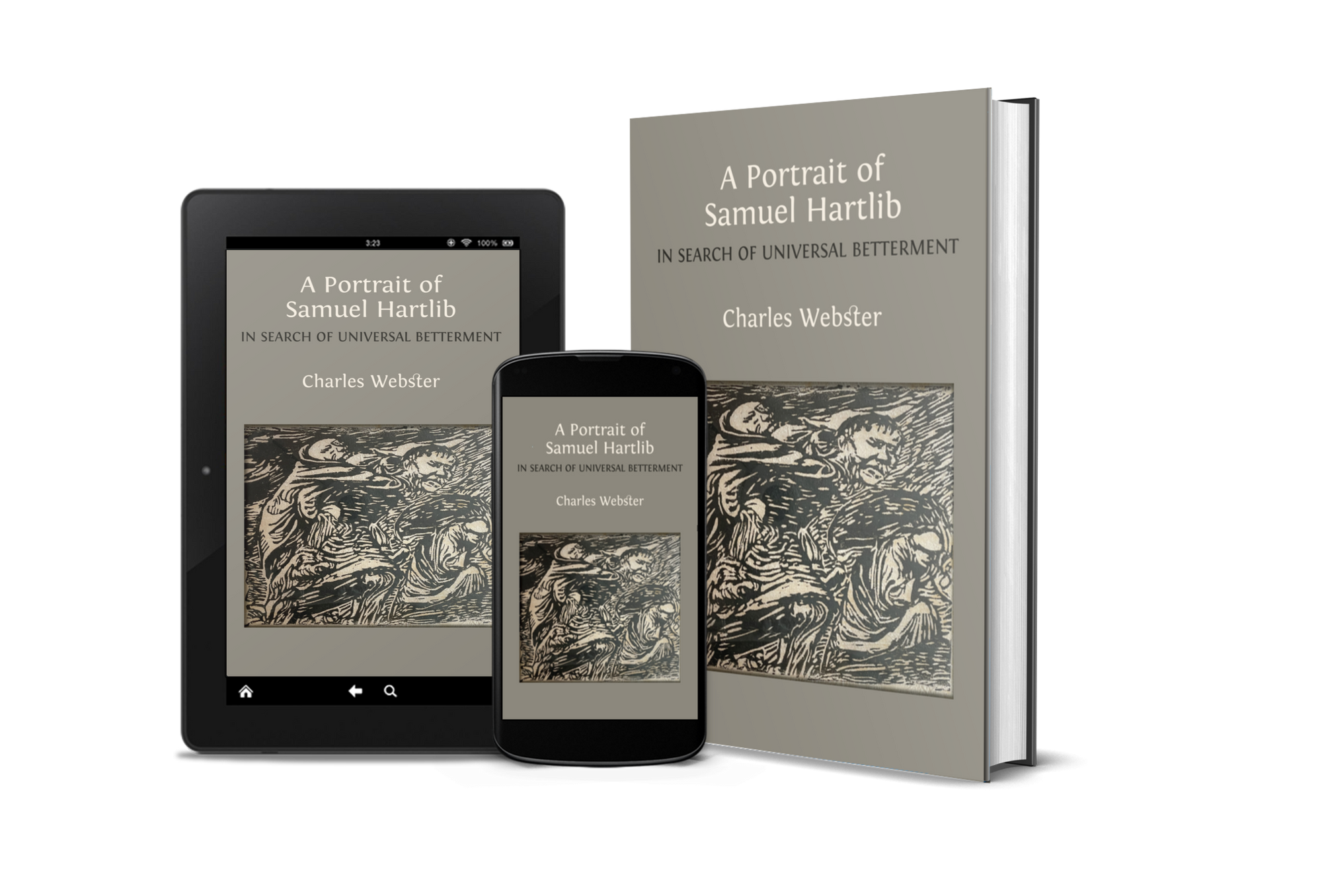
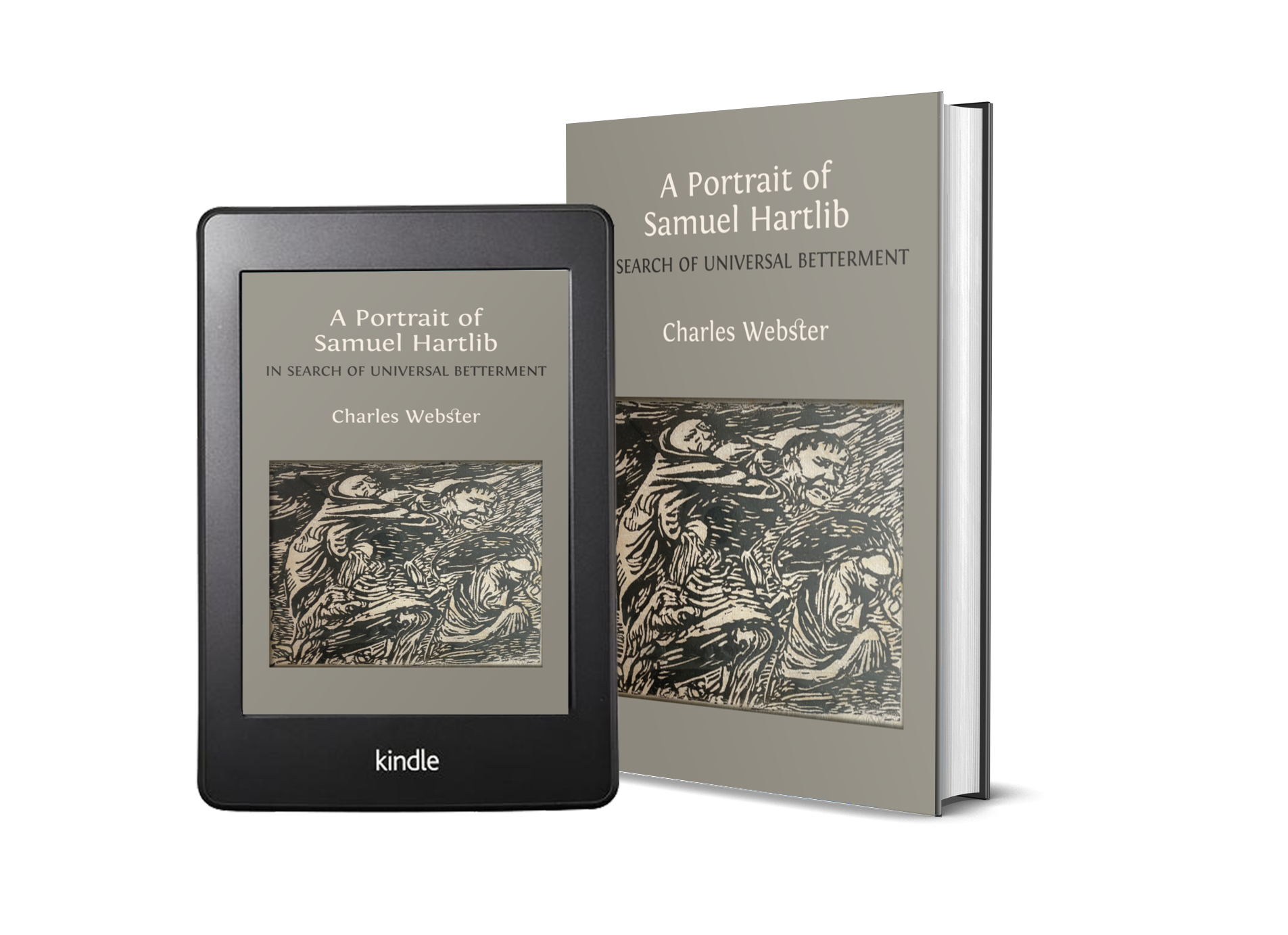
This preoccupation with an impending doomsday is not particular to the twenty-first century, however. Charles Webster’s book A Portrait of Samuel Hartlib: In Search of Universal Betterment chronicles the ventures of Samuel Hartlib, known as “the Great Intelligencer of Europe.” Hartlib lived during the tumultuous decades of the mid-seventeenth century when a growing apocalyptic fervour gripped the masses. As Webster reveals, this broader concern for predicting the end of times also reflected deeper concerns regarding the bleak realities that many were facing during these periods of crisis.

The 17th century saw England grapple with consecutive civil wars between Parliamentarians and Royalists that lasted from 1642 until 1651. In total, it is estimated that upwards of 200,000 people lost their lives as a consequence of these civil wars, be it through direct combat or disease. Among those who died was Charles I, who was accused of treason and was subsequently executed on January 30, 1649, causing the temporary fall of the Stuart line. Fifth Monarchists promoted the millennialist belief that the demise of the head of state would usher in a thousand-year-long reign of Christ.

Religious and political turmoil also impacted Hartlib’s early life. He was born around 1600 to a German-Protestant father who fled various towns in Poland due to mounting persecution against religious minorities during the Counter-Reformation. His father would eventually settle in Elbing, Poland in 1589, with hopes of creating a more stable life among the larger immigrant population of the coastal city. However, these aspirations would also come to a standstill as the plague claimed nearly a third of the city’s population in 1625 and Swedish forces occupied the city a year later until 1635 and then once more from 1655 to 1660.

Following academic opportunity, Hartlib moved to Cambridge in 1625. Beyond occasional trips back to Poland, this move cemented England as his permanent abode. Nevertheless, Hartlib maintained a deep concern for the plight of refugees. He offered help in various forms, be it helping to raise funds for exiled communities or promoting universal education. Even while dealing with financial uncertainties due to inconsistent sponsorships, Hartlib also opened his home to fleeing Protestants.

It is out of this dedication to the Protestant cause that Hartlib, with major contributions from Scottish minister John Dury and tax official Michael Gühler, published one of his most widely circulated texts in February 1651, Clavis apocalyptica—a title that borrowed its name from Joseph Mede’s 1627 study on the eschatological chronology of the Book of Revelations.

In Clavis apocalyptica, Gühler surmised that the world would end in 1655, but instead of apocalyptic figures solely vanquishing the earth, he predicted it would end the strife of the Protestants and that the “oppressed [would] take the possession of their former dignities” (Hartlib 89). While Dury did not pinpoint an exact year unlike Gühler, his preface in the book also related Judgment Day to the dismal condition of Protestants, citing a letter written by Czech theologian John Amos Comenius in which he mentions his son-in-law witnessing only terrors when visiting the Polish cities of Warsaw and Brieg.

Within this 1651 text, the apocalypse unfolds not only as a celestial event. It was intertwined with the earthly dealings of monarchies and their treatment of their subjects, in which Hartlib and his circle were indelibly enmeshed.

A recurring theme within A Portrait of Samuel Hartlib is that the lives of both Hartlib and his confidantes were coloured by financial hardship. Many of Hartlib’s associates migrated to different countries in pursuit of better financial opportunity outside of England. Others were not so fortunate. Hartlib describes how Gabriel Plattes, an English writer of agriculture, fell “downe dead in the street for want of food.” By the time of his own death in 1662, Hartlib wrote extensive letters regarding his worsening state of health and financial distress—about which his friends could only send messages of sympathy.

Thus, while Webster’s book provides an overview of the larger, fiery debates regarding millennialist movements, the Counter-Reformation and political shifts in Europe, A Portrait of Samuel Hartlib also sheds a critical light on the “personal apocalypses” that Hartlib contended with as he transformed from an aspiring student with little professional training to a prominent European interlocutor.

Within Webster’s chapters, Hartlib’s accomplishments become testaments to the enduring value of education, religious freedom and community-building. While Hartlib’s tenacity is certainly a strong point, it was born out of difficulties that many times he had no means to change. Amidst such turmoil, the ability to predict the end times may have provided a sense of control during these periods. More than that, it instilled a sense of hope that, amidst despair, change was just on the horizon.

Hartlib, however, did not look towards the future in hopes of erasing his world. Instead, his continued commitment to universal betterment even as his own life was near its end reminds readers that imagining a different tomorrow does not preclude committing oneself to a different today.

Nearly four centuries later, this still stands true.


'A Portrait of Samuel Hartlib: In Search of Universal Betterment' by Charles Webster is an Open Access title available to read and download for free or to purchase in all available print and ebook formats at the link below.

A Portrait of Samuel Hartlib: In Search of Universal Betterment
The 2013 digitization of the vast Hartlib Papers archive highlighted the pressing need for a comprehensive modern study of Samuel Hartlib (1600–1662), a central figure in seventeenth-century intellectual life. Though educated in Eastern Europe, Hartlib spent his adult life in London, where he became…
Small Apocalypses


A Portrait of Samuel Hartlib

A Portrait of Samuel Hartlib

By Charles Webster

Particularly because the massive Hartlib archive has been available in digitised form since 2013, it is amazing that Hartlib himself has not been the subject of a modern English language monograph. Acceleration in the pace of Hartlib studies is essentially a characteristic of the last few years, during which the ambitious French study on Hartlib by Stéphane Haffemayr, dating from 2018, is the major item of relevance. My Portrait of Samuel Hartlib is an entirely different construction, but it pursues the same objective of confirming Hartlib as a figure of central importance in the British, European and American history of that revolutionary period.

Hartlib’s achievement was all the more remarkable considering the disadvantages stemming from his status as an obscure immigrant, of only indifferent social or professional status, and soon the sufferer of extreme poverty and ever-escalating ill-health. However, his position as an outsider imported various benefits, among these being his education in Silesia, which was cosmopolitan and diverse. Additional strengths were acquired as a private student in Cambridge, which prepared him for an intimate alignment with the developing Puritan ascendancy. He was therefore well prepared for settlement in London, where he remained from 1628 until his death in 1662.

There he proved his utility as a source of a wide variety of intelligence, ranging from international affairs to economic and technical matters. His services were valued by aspiring politicians, the incipient religious leadership and powerful members of the Puritan nobility. Critical among these was John Pym, who soon emerged as a dominant voice among the Parliamentary political leadership.

A particular asset of Hartlib was his association Jan Amos Komenský (Comenius), the Czech exile, whose visit to England in 1641-2 raised hopes for the wholesale adoption of his revolutionary educational programme. This proved to be impracticable. But Hartlib compensated for this through his participation in the remarkable efflorescence of educational initiatives that characterised the interregnum and Cromwellian protectorate.

This period proved to be the highpoint in Hartlib’s career, when he became universally known and enjoyed cordial relations with the evolving political leadership, including Oliver Cromwell. In recognition of his sworn commitment to public service he was awarded a state pension, although this was never sufficient to support the ever-expanding horizons of his ambitions.

The extent of his influence was increased by his emergence as a major publisher in the general field of reform, especially agriculture, which at that date held the key to economic development. This has led this period in agriculture to be labelled as ‘The age of Hartlib.’ Initiatives of this kind reflected the status of natural leadership that Hartlib attained, particularly among the avant-garde of the younger generation. In this context he generated a variety of schemes for the organisation of advanced research, most of which proved to be impracticable. However, these initiatives generated a taste for active cooperation which expressed itself in the emergence of informal working parties that I call the Hartlibian scientific movement. These, I claim, were something of a precursor to more formal organisations such as the Royal Society.

The importance of these informal agencies should not be underestimated. As economic historians now appreciate, among the enduring achievements of the team led by Hartlib were the first policy statements that are now recognised as the basis for what is now known as the ‘Hartlibian Political Economy’. This was not merely an abstract theoretical framework, but was a spur to economic development and the transformation of foreign policy, aiming at nothing less that Britain’s world dominance.

Hartlib participated in this revolutionary intellectual reorientation in further respects such as his active involvement in apocalyptic speculation which, during this period, was a spur to many practical issues such as the consolidation of alliances between the Protestant states. But this body of thinking also reflected the sense of Britain’s special place of leadership in world reformation. The nation came to be regarded as the epitome of the Communion of Saints and the locus of the New Jerusalem. It was these themes that were uppermost in their minds, when Hartlib and his friends exchanged the last of their letters before his painful death in March 1662.


'A Portrait of Samuel Hartlib: In Search of Universal Betterment' by Charles Webster is an Open Access title available to read and download for free or to purchase in all available print and ebook formats at the link below.

A Portrait of Samuel Hartlib: In Search of Universal Betterment
The 2013 digitization of the vast Hartlib Papers archive highlighted the pressing need for a comprehensive modern study of Samuel Hartlib (1600–1662), a central figure in seventeenth-century intellectual life. Though educated in Eastern Europe, Hartlib spent his adult life in London, where he became…
A Portrait of Samuel Hartlib

A Studious Use

A Studious Use. Designing from the Undercommons Giovanni Marmont What if study was not about learning, improvement, accreditation? What if use was not about intentionality, function, ownership? A Studious Use invites readers to reconsider the habitual logics and material priorities at play in practices of both study and use. It examines their potential and actual […]

A Studious Use

A Studious Use. Designing from the Undercommons Giovanni Marmont What if study was not about learning, improvement, accreditation? What if use was not about intentionality, function, ownership? A Studious Use invites readers to reconsider the habitual logics and material priorities at play in practices of both study and use. It examines their potential and actual […]

La financiarisation de la santé au Sénégal (1840-1960)

Un livre de Valéry Ridde

Pour accéder au livre en version html, cliquez ici.
Pour télécharger le PDF, cliquez ici (à venir).

À partir des années 1980, les institutions internationales ont incité les pays africains à recourir à des instruments politiques de financement de la santé inspirés d’une approche libérable. Les patient·e·s ont de plus en plus payé les soins, les formations sanitaires ont été mises en concurrence, des ristournes et des primes ont été données aux soignant·e·s, des mutuelles de santé ont été lancées. Dans cet ouvrage qui s’adresse aux historien·ne·s de la santé et aux personnes intéressées par la santé publique, il s’agit de remonter le temps et de comprendre comment ces outils s’inscrivent dans une continuité historique. À partir du Sénégal et avec une analyse originale des archives coloniales, de la presse et des publications, l’étude montre que les idées libérales de l’organisation et du financement des soins étaient déjà ancrées dans l’administration coloniale française. Elles étaient même présentes à l’échelle de l’Empire et confirment le manque de préoccupation pour l’accès aux soins des populations africaines et des plus pauvres. Les défis actuels de ces approches pour la couverture sanitaire universelle ont donc une histoire ancienne que l’ouvrage met au jour pour réclamer un changement de paradigme.

***

ISBN pour l’impression : 978-2-925128-46-5

ISBN pour le PDF : 978-2-925128-47-2

DOI : à venir

371 pages
Design de la couverture : Kate McDonnell
Date de publication : novembre 2025

***

Table des matières

Préface – Mor NDAO

I – UN BUDGET ET DES HÔPITAUX NE RÉPONDANT PAS AUX BESOINS
III – L’AMI : LA GRATUITÉ D’UNE SANTÉ PUBLIQUE INDIGENTE
IV – LA PRATIQUE PRIVÉE DE LA MÉDECINE
V – DES SOURCES DE LA MUTUALITÉ ET DE SES DÉFIS
VI – UNE FINANCIARISATION COMPARABLE DANS LES AUTRES TERRITOIRES DE L’EMPIRE

Finding Resonance, Finding María Lugones

I am always listening for María: I find her most in the traces of words.

Trained as a literary scholar, I relish in the contours of stories; I savor the nuances found between crevices of language and the shades of implication when those languages are strung together. It is no surprise, then, that since the death of my friend and mentor María Lugones, I have turned to many books, particularly her book, Pilgrimages/Peregrinajes: Theorizing Coalition Against Multiple Oppression,  to feel connected to her. I have struggled, though, to write about her, talk about her, even think about her for many years. It wasn’t until I found a passage about spirits and hauntings in Cuban-American writer and artist Ana Menéndez’s novel The Apartment  that I found language to describe a way through the grief of the last five years.

Menéndez’s novel follows many characters that all, at some point in time, come to live in apartment 2B in Miami Beach. While each person is seemingly disconnected from the next, they all leaves sonic traces of themselves for the next person’s arrival. Each new tenant leaves behind the creak of a dented floorboard, or the rumbling of the air conditioner, the faint melody of a piano, or the swish of spirits looking for a place to sit down. The climax of the novel revolves around Lenin García, a young Cuban migrant who commits suicide in the Miami apartment shortly after arriving. Anna, a journalist who migrated to the US from the Czech Republic during their communist regime, prepares the apartment for rental after the suicide. When looking through Lenin’s belongings she explains that the “Spirits pressed down on her, and again and again she rejects them. Sends them packing, back to the pre-rational past.  Not a haunting, but an echo. The boy’s life a gesture pointing back to her own. A  dream of a thousand iterations” (131). These spirits that surround her, that remind her of her own life’s ghosts, provide a particularly sonic connection; the tethers that connect one migration tragedy to another is an echo of commonality that creates a kin experience.

The three years I learned with and from María are overshadowed by the physical distance the pandemic required of me in her final moments. When I try to write about her, my hair stands on end, my eyes water, my nose drips, and I stretch out my hand toward a presence I feel, just out of reach. I know it’s her, I just can’t seem to touch her. I have described María’s death as a haunting—as something that haunts me. I defined this haunting as a physical presence that I could not see, but I could feel, sense. But what if, like Anna, I am feeling, not a haunting, but an echo; or more accurately, the resonances of María that echo around me constantly? What Menéndez’s passage provides is the necessity of reinterpreting my awareness of María from one of general sensing to one of specific aural attunement. If I am listening for her, how, then do I keep her with me?

Lenin, from The Apartment, provides a potential answer: when meeting with a curandera in Cuba, she tells him “The ancestors speak to you from the home of your inner life. When your inner life is spare, there is nowhere for the ghosts to sit. When you furnish your spirit, the ancestors will once again find rest in you” (143). Echoes become an analytic that provide furnishings ‘in the soul’ for sustained company of those who have passed. The reverberation of echoes—reverberations as a prolonged sense of resonance that stretches the meeting of two energies—can, quite literally, allow a reader to connect back to people across space and time. My tether to María is a resonance that simultaneously locates and disperses spatially and temporally. I hear this connection as  my harmony to her melody. To further the metaphor, that resonance is the strumming of a guitar, where I am the guitar and she is the musician, and that moment where we both hear for each other, even when we do not know the other exists, is the note.

What happens when I use literary methods of analysis to find people in the interstices of sound? To search for María in what she calls the “enclosures and openings of our praxis” as a reader of her text? Now that I had to search the histories of her echo, I turned to her book, Pilgrimages/Peregrinajes.

When María recommends “to women of color in the United States that we learn to love each other by learning to travel to each other’s ‘worlds’,” (78) I imagine our first few encounters; encounters that were strange, difficult, and lessons in learning to listen to her on her terms. I had been invited to her home in Binghamton, New York for a meeting of a political-intellectual group she hosted, and was nervous to meet the woman I had written my Master’s thesis on, and who was the reason I applied to Binghamton for a PhD program. Her voice rang through the room, slow and clear; her mouth pursed a bit as she thought through her next sentence, her finger pointed as she spoke her next idea. In trying to stay out of her way, I became a barrier when she moved backward; she bumped into me and said simply ‘you must be careful not to trip me’ and moved along. I was mortified.

Our next few encounters were similarly odd, and lead me to think that, maybe, María was not the right choice for my mentoring needs. A few months into this first year in graduate school—where tenured male professors were violent toward me, and I was not sure I should stay in academia—I confessed to a friend in the same political-intellectual group that I was not sure María liked me or that I should work with her. Her response changed everything: this friend, who had worked with María many, many years said: “don’t do that. Don’t make her mother you. It’s not who she is. Travel to her, learn her.” I finally understood that traveling to María’s world meant listening to her from her perspective, not my own. That shift in me “from being one person to being a different person” (89) is how I first found María in the haptic world. I learned to listening to her: I learned the catch in her throat meant she wanted tea; I learned the increase in sighs meant she was in more pain that usual; I learned the shuffling of papers probably meant she was looking for her handkerchief to wipe her forehead as she had a hot flash. Each of these sonic gestures, I could respond to—could show up for her.

But with María’s death, this kind of listening is no longer available to me; I could not listen for hem or  hmm or tchps. I had to learn to listen differently. In re-reading Pilgrimages/Peregrinajes I learn that it does not just contain her philosophical interventions for liberatory futures. It is a series of stories; her stories of the echoes that resonate inside of her; stories that she weaves together that  happen to name philosophical practices of relationality. It is through the coerced placement of her by her father in an asylum that she finds other woman who teach her to resist; this resistance is sonic: a woman repeating over and over “I am busy, I am busy” as they electroshock her (i). It is through wanting desperately to love her mother that she finds ways her mother taught her to listen differently in order to name the capacity of ‘world’-traveling. What I had felt when I first read her work over a decade ago was a resonance; a sonic reverberation across space and time that connected my to her before our physical meeting, during our time as friends and mentor/mentee, and now after her physical death.

Connecting to María through echoes feels effortless now that I have the language. I hear now María’s  warning against the dangers in the primacy of the visual. In “Hablando Cara a Cara/Speaking Face to Face: An Exploration of Ethnocentric Racism,” she explains:

I exercise this playful practice. The appreciation of my playfulness and its meaning may be realized when the possibility of becoming playful in this way has been collectively realized, when it has become realized by us. It is here to be appreciated or missed and both the appreciation and the missing are significant. The more fully this playfulness is appreciated, the less broken I am to you, the more dimensional I am to you. But I want to exercise my multidimensionality even if you do not appreciate it. To do otherwise would be to engage in self-mutilation, to come to be just the person that you see. To play in this way is then an act of resistance as well as an act of self- affirmation (41).

What she taught me here is that being herself meant a practice that was more than being seen. To be what others could only see was an act of mutilation to her multidimensionality. That reminder was crucial to becoming her friend during my time at Binghamton, but even more crucial now that she is gone from this world.

Image by Revista Lavaca,  CC BY-SA 4.0

I’ll leave you with the most important story she left behind: she provided a method of learning that was based on the senses and focused primarily on the sonic—what she called “tantear.” This tantear has become instrumental in my own research. It is a fumbling around in the dark, a feeling around tactically that focuses on searching “for meaning, for the limits of possibility; putting our hands to our ears to hear better, to hear the meaning in the enclosures and openings of our praxis” (1). The embodied experience of stumbling, of careful and intense feeling for and with others, requires a capacity of listening deeply. It is listening that undergirds the learning. The language of the sonic provides the understanding of the feelings within the body. Listening becomes a profound practice of relationality; echoes become a mechanism of connection; and resonance becomes the confirmation that I can still be with María.  

Images courtesy of the author, except where noted.

Daimys Ester García is a Latinex writer, artist and educator from Miami. She earned her PhD in Comparative Literature at SUNY Binghamton. She is currently an Assistant Professor in English at the College of Wooster, where her research and teaching is at the intersections of Latinx literatures & studies, Native literatures & studies, women of color feminisms, and decolonial praxis with a focus on coalitional politic. She is working on a  book manuscript, tentatively titled Comfort is Colonialism: Coalitional Commitments for Cuban-American Women Writers, which offers a repertoire of practices to re-connect Cuban-Americans with other histories of resistance in the US.

Thank you to Wanda Alarcón for care in the form of editorial labor.

REWIND!…If you liked this post, you may also dig: 

Faithful Listening:  Notes Toward a Latinx Listening Methodology–Wanda Alarcón, Inés Casillas, Esther Díaz Martín, Sara Veronica Hinojos, and Cloe Gentile Reyes

Enacting Queer Listening, or When Anzaldúa Laughs–Maria Chaves Daza

“Oh how so East L.A.”: The Sound of 80s Flashbacks in Chicana Literature–Wanda Alarcón

Xicanacimiento, Life-giving Sonics of Critical Consciousness–Esther Díaz Martín and Kristian E. Vasquez

Finding Resonance, Finding María Lugones

I am always listening for María: I find her most in the traces of words.

Trained as a literary scholar, I relish in the contours of stories; I savor the nuances found between crevices of language and the shades of implication when those languages are strung together. It is no surprise, then, that since the death of my friend and mentor María Lugones, I have turned to many books, particularly her book, Pilgrimages/Peregrinajes: Theorizing Coalition Against Multiple Oppression,  to feel connected to her. I have struggled, though, to write about her, talk about her, even think about her for many years. It wasn’t until I found a passage about spirits and hauntings in Cuban-American writer and artist Ana Menéndez’s novel The Apartment  that I found language to describe a way through the grief of the last five years.

Menéndez’s novel follows many characters that all, at some point in time, come to live in apartment 2B in Miami Beach. While each person is seemingly disconnected from the next, they all leaves sonic traces of themselves for the next person’s arrival. Each new tenant leaves behind the creak of a dented floorboard, or the rumbling of the air conditioner, the faint melody of a piano, or the swish of spirits looking for a place to sit down. The climax of the novel revolves around Lenin García, a young Cuban migrant who commits suicide in the Miami apartment shortly after arriving. Anna, a journalist who migrated to the US from the Czech Republic during their communist regime, prepares the apartment for rental after the suicide. When looking through Lenin’s belongings she explains that the “Spirits pressed down on her, and again and again she rejects them. Sends them packing, back to the pre-rational past.  Not a haunting, but an echo. The boy’s life a gesture pointing back to her own. A  dream of a thousand iterations” (131). These spirits that surround her, that remind her of her own life’s ghosts, provide a particularly sonic connection; the tethers that connect one migration tragedy to another is an echo of commonality that creates a kin experience.

The three years I learned with and from María are overshadowed by the physical distance the pandemic required of me in her final moments. When I try to write about her, my hair stands on end, my eyes water, my nose drips, and I stretch out my hand toward a presence I feel, just out of reach. I know it’s her, I just can’t seem to touch her. I have described María’s death as a haunting—as something that haunts me. I defined this haunting as a physical presence that I could not see, but I could feel, sense. But what if, like Anna, I am feeling, not a haunting, but an echo; or more accurately, the resonances of María that echo around me constantly? What Menéndez’s passage provides is the necessity of reinterpreting my awareness of María from one of general sensing to one of specific aural attunement. If I am listening for her, how, then do I keep her with me?

Lenin, from The Apartment, provides a potential answer: when meeting with a curandera in Cuba, she tells him “The ancestors speak to you from the home of your inner life. When your inner life is spare, there is nowhere for the ghosts to sit. When you furnish your spirit, the ancestors will once again find rest in you” (143). Echoes become an analytic that provide furnishings ‘in the soul’ for sustained company of those who have passed. The reverberation of echoes—reverberations as a prolonged sense of resonance that stretches the meeting of two energies—can, quite literally, allow a reader to connect back to people across space and time. My tether to María is a resonance that simultaneously locates and disperses spatially and temporally. I hear this connection as  my harmony to her melody. To further the metaphor, that resonance is the strumming of a guitar, where I am the guitar and she is the musician, and that moment where we both hear for each other, even when we do not know the other exists, is the note.

What happens when I use literary methods of analysis to find people in the interstices of sound? To search for María in what she calls the “enclosures and openings of our praxis” as a reader of her text? Now that I had to search the histories of her echo, I turned to her book, Pilgrimages/Peregrinajes.

When María recommends “to women of color in the United States that we learn to love each other by learning to travel to each other’s ‘worlds’,” (78) I imagine our first few encounters; encounters that were strange, difficult, and lessons in learning to listen to her on her terms. I had been invited to her home in Binghamton, New York for a meeting of a political-intellectual group she hosted, and was nervous to meet the woman I had written my Master’s thesis on, and who was the reason I applied to Binghamton for a PhD program. Her voice rang through the room, slow and clear; her mouth pursed a bit as she thought through her next sentence, her finger pointed as she spoke her next idea. In trying to stay out of her way, I became a barrier when she moved backward; she bumped into me and said simply ‘you must be careful not to trip me’ and moved along. I was mortified.

Our next few encounters were similarly odd, and lead me to think that, maybe, María was not the right choice for my mentoring needs. A few months into this first year in graduate school—where tenured male professors were violent toward me, and I was not sure I should stay in academia—I confessed to a friend in the same political-intellectual group that I was not sure María liked me or that I should work with her. Her response changed everything: this friend, who had worked with María many, many years said: “don’t do that. Don’t make her mother you. It’s not who she is. Travel to her, learn her.” I finally understood that traveling to María’s world meant listening to her from her perspective, not my own. That shift in me “from being one person to being a different person” (89) is how I first found María in the haptic world. I learned to listening to her: I learned the catch in her throat meant she wanted tea; I learned the increase in sighs meant she was in more pain that usual; I learned the shuffling of papers probably meant she was looking for her handkerchief to wipe her forehead as she had a hot flash. Each of these sonic gestures, I could respond to—could show up for her.

But with María’s death, this kind of listening is no longer available to me; I could not listen for hem or  hmm or tchps. I had to learn to listen differently. In re-reading Pilgrimages/Peregrinajes I learn that it does not just contain her philosophical interventions for liberatory futures. It is a series of stories; her stories of the echoes that resonate inside of her; stories that she weaves together that  happen to name philosophical practices of relationality. It is through the coerced placement of her by her father in an asylum that she finds other woman who teach her to resist; this resistance is sonic: a woman repeating over and over “I am busy, I am busy” as they electroshock her (i). It is through wanting desperately to love her mother that she finds ways her mother taught her to listen differently in order to name the capacity of ‘world’-traveling. What I had felt when I first read her work over a decade ago was a resonance; a sonic reverberation across space and time that connected my to her before our physical meeting, during our time as friends and mentor/mentee, and now after her physical death.

Connecting to María through echoes feels effortless now that I have the language. I hear now María’s  warning against the dangers in the primacy of the visual. In “Hablando Cara a Cara/Speaking Face to Face: An Exploration of Ethnocentric Racism,” she explains:

I exercise this playful practice. The appreciation of my playfulness and its meaning may be realized when the possibility of becoming playful in this way has been collectively realized, when it has become realized by us. It is here to be appreciated or missed and both the appreciation and the missing are significant. The more fully this playfulness is appreciated, the less broken I am to you, the more dimensional I am to you. But I want to exercise my multidimensionality even if you do not appreciate it. To do otherwise would be to engage in self-mutilation, to come to be just the person that you see. To play in this way is then an act of resistance as well as an act of self- affirmation (41).

What she taught me here is that being herself meant a practice that was more than being seen. To be what others could only see was an act of mutilation to her multidimensionality. That reminder was crucial to becoming her friend during my time at Binghamton, but even more crucial now that she is gone from this world.

Image by Revista Lavaca,  CC BY-SA 4.0

I’ll leave you with the most important story she left behind: she provided a method of learning that was based on the senses and focused primarily on the sonic—what she called “tantear.” This tantear has become instrumental in my own research. It is a fumbling around in the dark, a feeling around tactically that focuses on searching “for meaning, for the limits of possibility; putting our hands to our ears to hear better, to hear the meaning in the enclosures and openings of our praxis” (1). The embodied experience of stumbling, of careful and intense feeling for and with others, requires a capacity of listening deeply. It is listening that undergirds the learning. The language of the sonic provides the understanding of the feelings within the body. Listening becomes a profound practice of relationality; echoes become a mechanism of connection; and resonance becomes the confirmation that I can still be with María.  

Images courtesy of the author, except where noted.

Daimys Ester García is a Latinex writer, artist and educator from Miami. She earned her PhD in Comparative Literature at SUNY Binghamton. She is currently an Assistant Professor in English at the College of Wooster, where her research and teaching is at the intersections of Latinx literatures & studies, Native literatures & studies, women of color feminisms, and decolonial praxis with a focus on coalitional politic. She is working on a  book manuscript, tentatively titled Comfort is Colonialism: Coalitional Commitments for Cuban-American Women Writers, which offers a repertoire of practices to re-connect Cuban-Americans with other histories of resistance in the US.

Thank you to Wanda Alarcón for care in the form of editorial labor.

REWIND!…If you liked this post, you may also dig: 

Faithful Listening:  Notes Toward a Latinx Listening Methodology–Wanda Alarcón, Inés Casillas, Esther Díaz Martín, Sara Veronica Hinojos, and Cloe Gentile Reyes

Enacting Queer Listening, or When Anzaldúa Laughs–Maria Chaves Daza

“Oh how so East L.A.”: The Sound of 80s Flashbacks in Chicana Literature–Wanda Alarcón

Xicanacimiento, Life-giving Sonics of Critical Consciousness–Esther Díaz Martín and Kristian E. Vasquez